
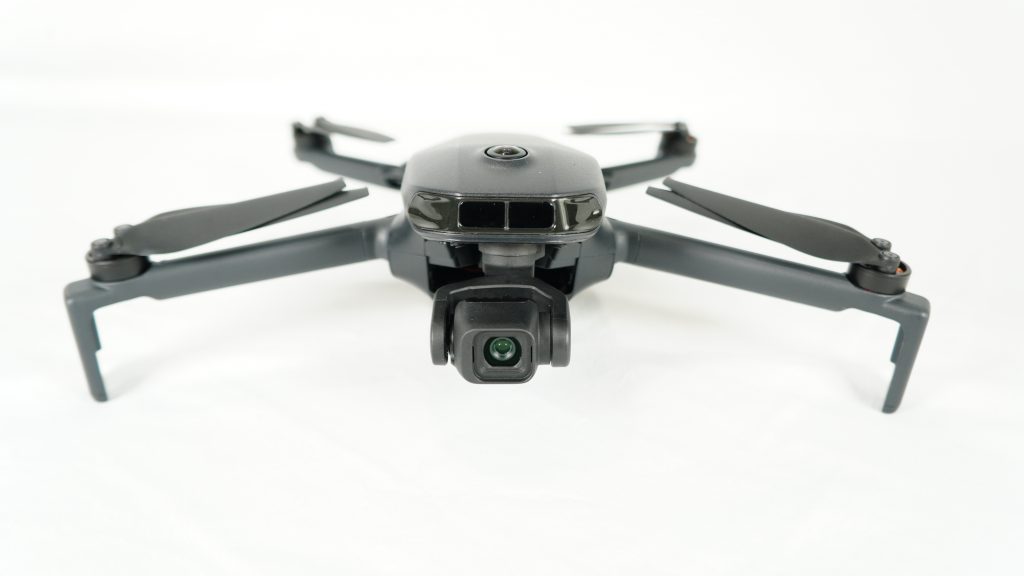
The Skyrover V1 feels familiar from the moment you take off. Its stable hover, responsive controls, and polished flying experience put it right alongside comparable DJI drones. After spending time with it, I think it deserves consideration—but whether it’s the best Skyrover for you comes down to price and priorities.
Starting at $749, the V1 sits at the top of Skyrover’s lineup. It brings longer advertised flight time, upgraded obstacle sensing, smarter return-to-home routing, and internal storage. Those are useful improvements, although the less expensive X1 remains my pick for overall value.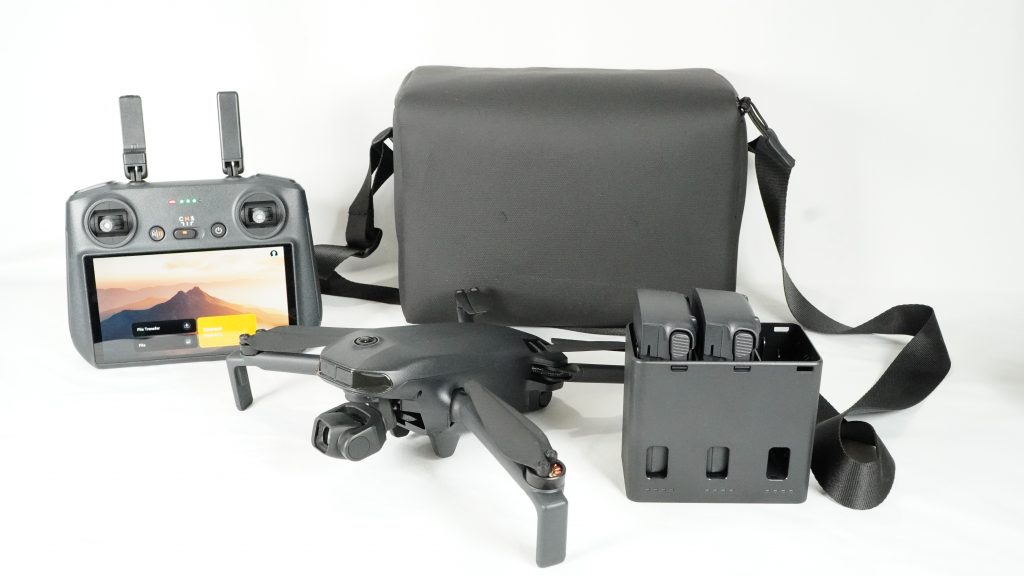
Is the Skyrover V1 Essentially a DJI Lito X1?
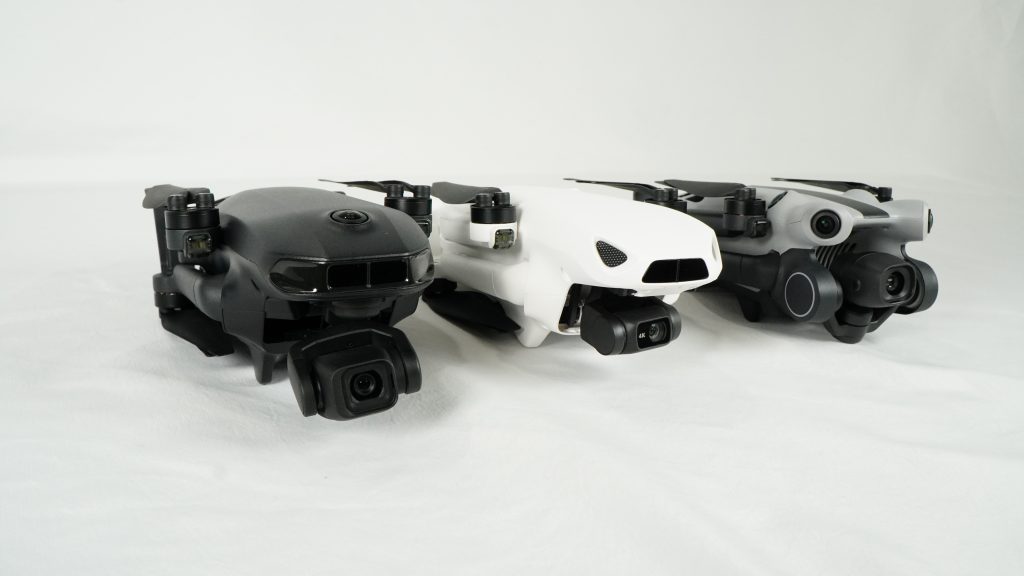
In appearance and overall concept, the V1 looks nearly identical to the DJI Lito X1. The compact folding design and familiar approach to aerial filming make the resemblance hard to miss.
However, that similarity doesn’t establish that every component, firmware feature, or accessory is interchangeable. I’d describe it as a near-identical-looking, DJI-style alternative rather than claim a confirmed manufacturing relationship.
There are specification differences, too. Skyrover lists a 1/1.28-inch sensor, 40-minute maximum flight time, and 40GB of internal storage. DJI lists a 1/1.3-inch sensor, 36 minutes with the standard battery, and 42GB of storage for the Lito X1. The resemblance is strong, but the specifications aren’t identical.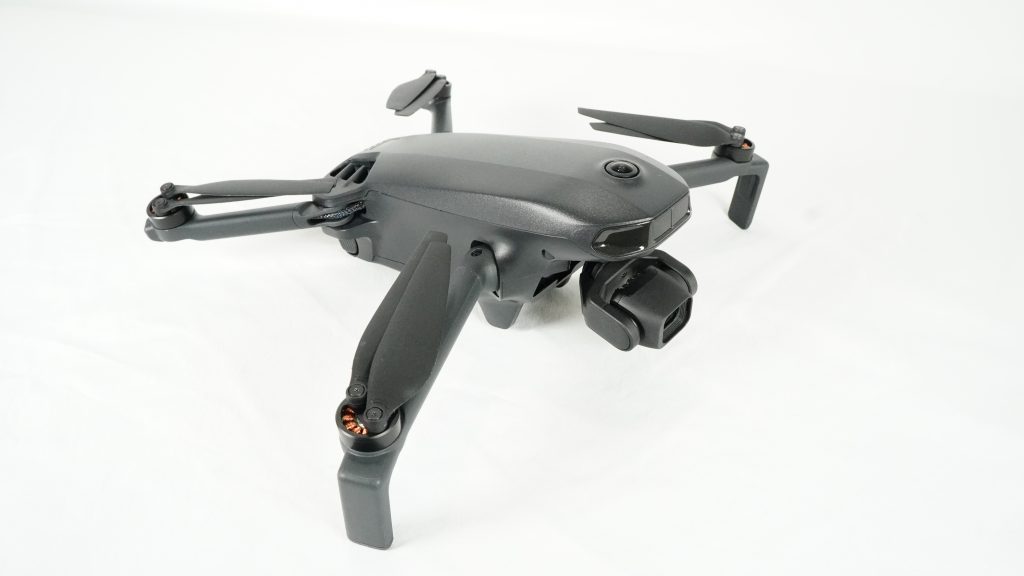
Longer Flights and a Strong Transmission Rating
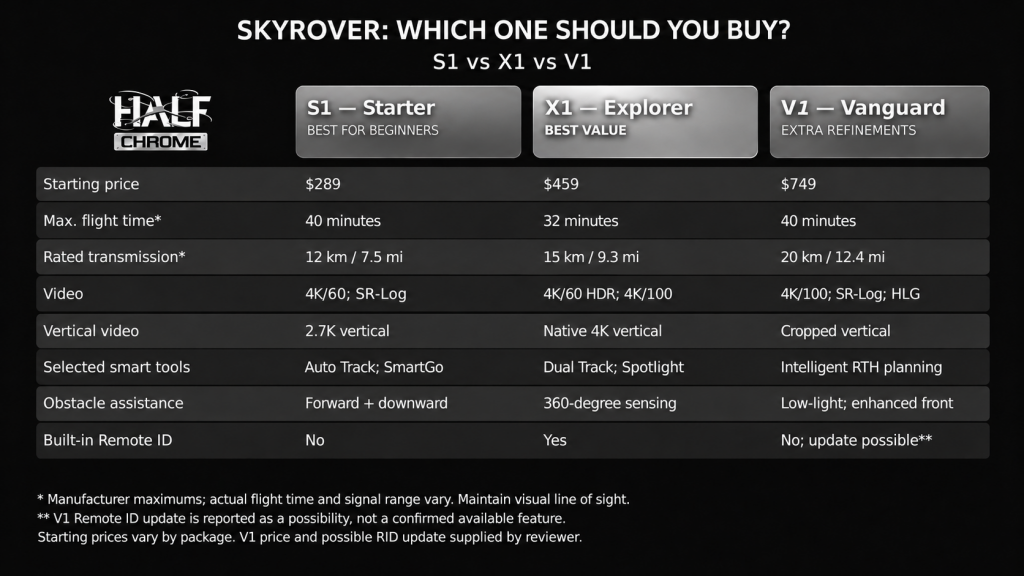
One of the V1’s most useful upgrades over the Skyrover X1 is battery life. Its advertised maximum increases from 32 to 40 minutes, a 25 percent improvement on paper.
That doesn’t mean you should expect 40 minutes of filming on every battery. Wind, flight speed, and leaving a reserve for landing all affect usable time. Nevertheless, extra endurance gives you more opportunity to frame a shot without immediately thinking about a battery swap.
The V1 also increases the advertised transmission rating from the X1’s 15 kilometers to 20 kilometers, or approximately 12.4 miles. This is an ideal-condition communication specification, not a recommended flight distance. For everyday flying, dependable reception matters much more than chasing a maximum-range number.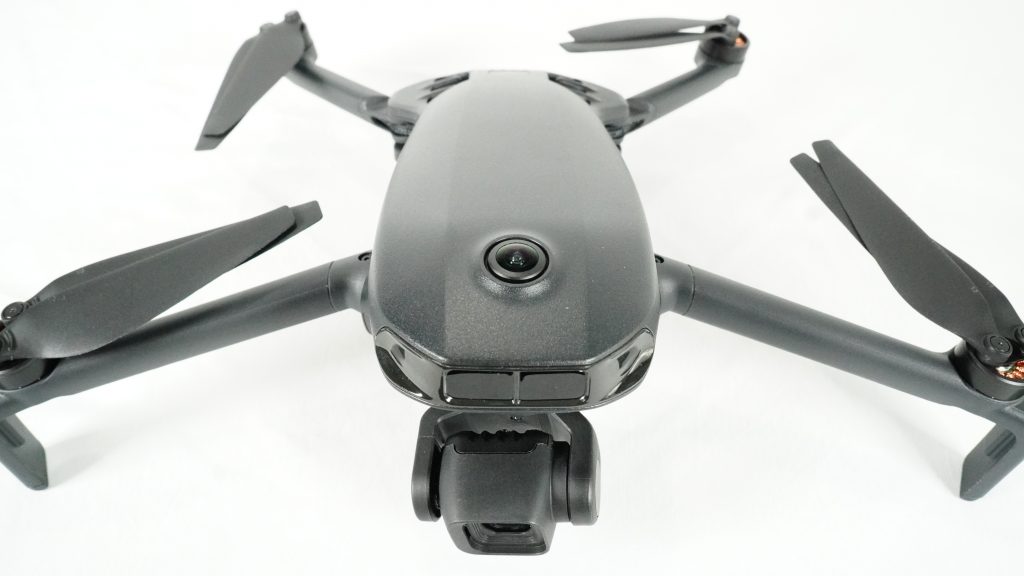
Camera Features and Internal Storage
The V1 uses a 1/1.28-inch CMOS sensor with Wide-Area Autofocus. It supports 4K/100fps slow-motion recording, SR-Log, and 10-bit HLG, providing flexibility for capturing movement and adjusting footage during editing.
Those recording features aren’t all exclusive to the V1. The X1 also supports 4K/100fps, SR-Log, and 10-bit HLG. That’s why I wouldn’t justify the price difference on camera specifications alone.
A more practical addition is 40GB of onboard storage. Forgetting a microSD card—or filling one up—doesn’t have to end your shoot.
The V1 also supports night shooting, automatically adapting camera settings when it recognizes a night scene. That’s convenient for evening footage, although the X1 offers night shooting as well.
One limitation is vertical video: the V1 uses a crop rather than rotating its camera into a native portrait orientation.
Upgraded Sensing and Return to Home
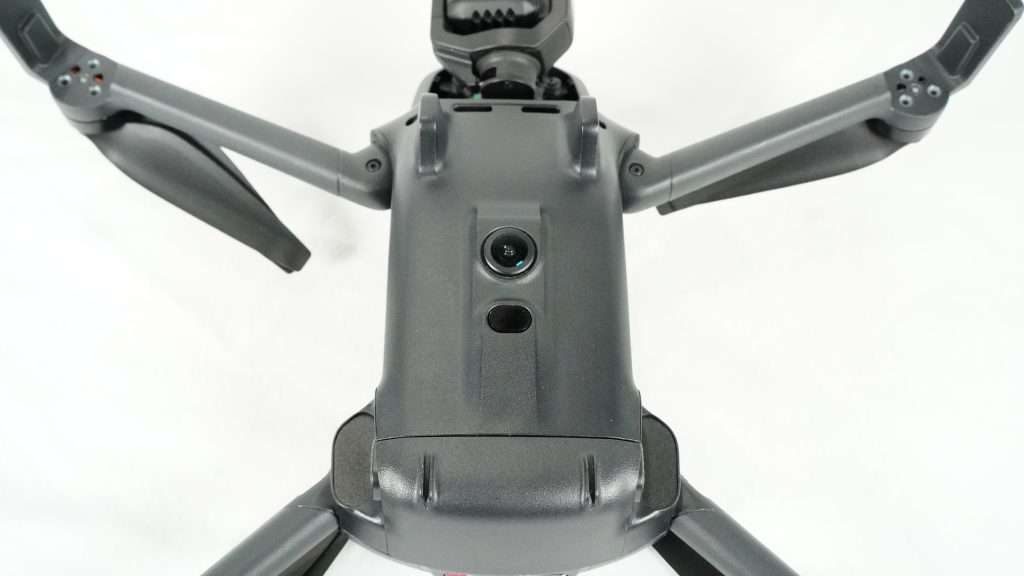
Skyrover highlights low-light obstacle sensing and enhanced forward obstacle avoidance as V1 improvements. These can provide useful assistance around sunset and in dimmer environments, within the system’s operating limits.
Its intelligent return-route planning uses detected obstacle information to help plan and adjust the flight home. That’s a welcome improvement for outdoor filming, but it still depends on what the sensors can detect.
These features support the pilot; they don’t remove the need to inspect your surroundings and monitor the aircraft.
FCC Clearance and Remote ID
The V1 has FCC clearance, according to Skyrover’s supplied documentation. FCC identification numbers for both the aircraft and remote controller are printed on the box.
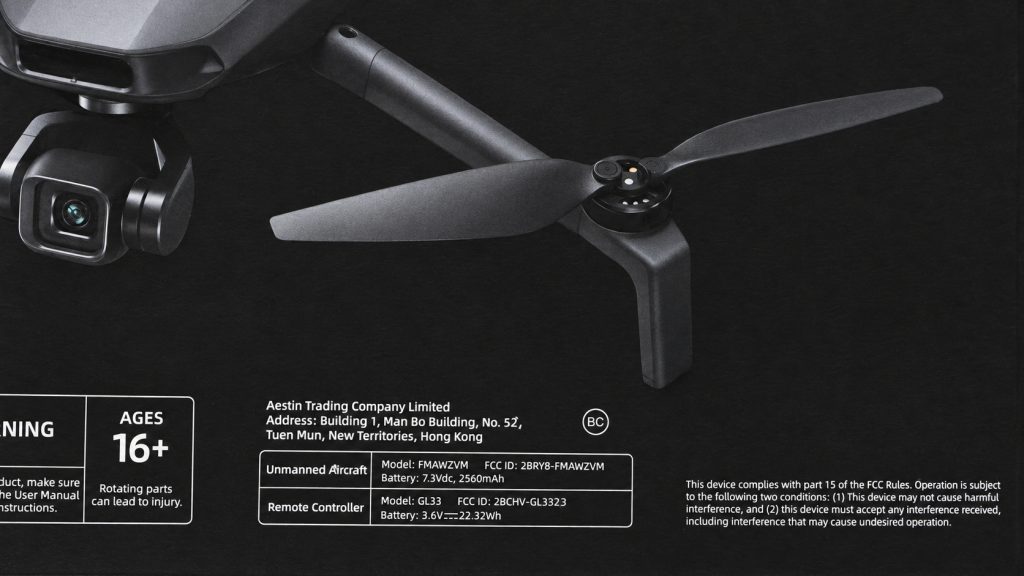
FCC authorization and FAA Remote ID are separate matters. At the time of writing, the X1 is the only drone in this three-model lineup with built-in Remote ID. I’ve been told the V1 may receive it through a firmware update, but that remains a possibility rather than an available feature.
Buy based on what the drone supports today.
Which Skyrover Should You Buy?
The S1, starting around $289, is my recommendation for beginners and budget-conscious buyers. It combines stabilized 4K/60 video, subject tracking, automated shots, and up to 40 minutes of advertised flight time.
The X1, starting around $459, is my best-value pick. Its broader obstacle sensing, capable camera features, native vertical shooting, and built-in Remote ID make it a versatile choice.
The V1 makes sense if longer flights, internal storage, and upgraded sensing and return features are worth the premium. It’s a polished drone with useful refinements, but the X1 remains the strongest deal for most people.
Buy the Skyrover V1: https://link.amazon/B06nhJ4B2